
Check out the different stages of planning and executing on your landscaping.
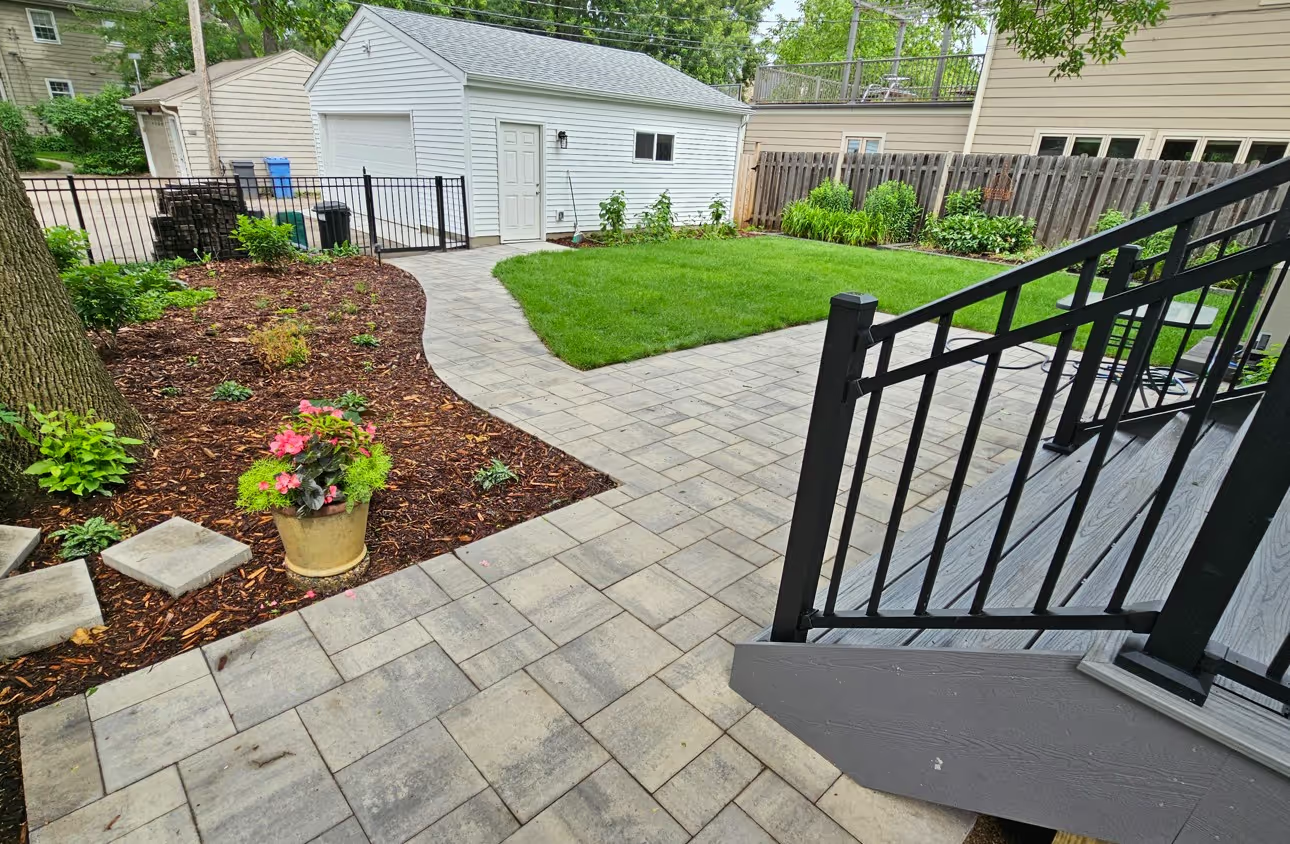
Most White Bear Lake homeowners think they're hiring someone to install a patio. What they're actually getting—when they work with Minnesota Landscapes—is a comprehensive outdoor transformation that turns their entire property into a cohesive outdoor living destination.
After nearly three decades of creating award-winning landscapes across Shoreview, Cottage Grove, Dellwood, and throughout the Twin Cities metro, we've refined our process into a proven 3-phase blueprint that delivers exceptional results consistently.
This comprehensive guide walks you through exactly what happens when you partner with our design-first landscape design-build company, from your initial consultation through the moment you host your first gathering on your new patio.
Beautiful patios don't happen by accident. They result from thoughtful planning, professional design expertise, and skilled execution—all coordinated seamlessly by a team with decades of experience.
The difference between a good patio and an exceptional outdoor living space lies in the process. Contractors who simply execute your ideas create nice patios. Design-build firms like Minnesota Landscapes create comprehensive outdoor destinations that exceed what you imagined possible.
Our 3-phase process ensures nothing gets overlooked, every decision serves your vision, and your investment delivers maximum value and enjoyment for decades.
The foundation of every successful outdoor living transformation begins long before any shovels touch soil. This phase typically occurs during Minnesota's coldest months—January through March—when our design team has the time and creative bandwidth to develop something truly exceptional.
Initial Consultation: Understanding Your Vision
Your journey begins with a complimentary design consultation, either virtual or in-person at your property. This isn't a sales meeting—it's a discovery session where Patrick Erkens or Kelly Bremer, our professional designers, learn about your lifestyle, preferences, and frustrations with your current outdoor space.
Patrick specializes in hardscape design and has been helping homeowners realize their outdoor potential since 2009. His approach centers on understanding how you'll actually use your space. Will you host large gatherings or intimate family dinners? Do you cook outdoors frequently? How do you want to move through your yard?
Kelly brings unique expertise as both a designer and plant manager. She thinks about how hardscapes integrate with landscaping, ensuring your patio installation sits within a cohesive landscape design rather than feeling arbitrarily placed.
During this consultation, we discuss:
Your current property's challenges and opportunities. What frustrates you about your existing space? What do you love that we should preserve?
How you envision using your outdoor space. Entertaining frequency and typical guest counts, cooking and dining preferences, desired activity areas (lounging, playing, gardening), privacy needs and aesthetic goals.
Your timeline and budget parameters. When do you want to enjoy your completed space? What's your comfortable investment range?
Comprehensive service needs beyond just patios. Do problematic trees need removal before construction? Would strategic plantings frame your new space? Should professional lighting extend your outdoor enjoyment into evening?
This consultation establishes the foundation for everything that follows. Rushing this phase leads to projects that look nice but don't truly serve your needs. Taking time here ensures your investment delivers maximum satisfaction.
Property Analysis: Understanding Your Site
Following the consultation, Patrick or Kelly conducts a detailed property analysis. This technical evaluation examines factors that most homeowners never consider but that dramatically affect design decisions and long-term performance.
For White Bear Lake properties, this analysis includes:
Topography and drainage patterns. How does water move across your property? Where does it accumulate? Minnesota's clay soil doesn't drain naturally, so understanding existing drainage is critical for preventing future problems.
Sun exposure throughout the day and across seasons. Where will afternoon sun make your patio uncomfortably hot? Which areas benefit from natural shade? How does winter sun create opportunities for year-round enjoyment?
Existing vegetation and trees. What should be preserved? What needs removal? How do mature trees affect both design possibilities and construction access?
Soil conditions and site access. Can equipment reach your backyard? How will material delivery work? What soil amendments might improve plant performance?
Views to preserve or screen. What sightlines should your design emphasize? What views need blocking for privacy?
Utility locations and permitting requirements. Where are underground utilities? Will the project require permits? Does your HOA have design requirements?
This analysis ensures your design works with your property's natural characteristics rather than fighting against them. It's why our installations perform flawlessly for decades while poorly planned projects develop problems within a few years.
Conceptual Design: Bringing Your Vision To Life
With consultation insights and site analysis complete, Patrick or Kelly develops conceptual designs that transform your vision into a workable plan. This is where Minnesota Landscapes' design-first philosophy truly differentiates our work.
Rather than simply placing a patio where you point, our designers consider how every element relates to every other element. They think about circulation patterns, activity zones, views, privacy, and how your outdoor space connects to your home's interior.
Conceptual designs typically include:
Multiple patio layout options exploring different sizes, shapes, and locations. Patrick might suggest an alternative location you hadn't considered that captures better sun exposure or creates more functional circulation.
Paver material recommendations appropriate for your aesthetic and Minnesota's climate. Should you choose Belgard Dimensions for modern aesthetics? Unilock Mattoni for traditional charm? Natural bluestone for authentic character?
Integration of additional features like outdoor kitchens or grilling stations, fire pits or fireplaces, seat walls or retaining walls, pergolas or shade structures, and water features.
Landscape enhancement recommendations from Kelly including strategic plantings to frame hardscape features, privacy screening with evergreens or shrubs, specimen trees for focal interest, and low-maintenance plant selections for easy care.
Lighting design for safety and ambiance including path lighting for safe navigation, accent lighting to highlight architectural features, uplighting for trees and plantings, and ambient lighting for entertaining areas.
Drainage solutions to protect your investment with proper grading to move water away from structures, integration with underground drainage systems, and solutions for challenging areas where water historically accumulates.
The conceptual design phase typically involves 2-3 meetings as we refine the plan based on your feedback. This collaborative process ensures the final design reflects your vision while benefiting from our professional expertise.
Design Refinement and Material Selection
Once you're excited about the conceptual direction, we refine every detail. This is when specific material selections happen, exact dimensions are finalized, and technical specifications are determined.
Patrick or Kelly guides you through material showrooms where you can see and touch actual paver samples, understand color options and how they complement your home's exterior, explore different laying patterns and how they affect visual scale, and learn about performance characteristics specific to Minnesota's climate.
For comprehensive transformations, this phase coordinates all elements:
If tree removal is needed, we schedule it appropriately within the project timeline. Trees removed during dormant season (late fall through early spring) minimize property disturbance.
Kelly develops a detailed planting plan specifying exact plant varieties, placement, and maturity sizes. Her selections consider Minnesota's challenging Zone 4 climate, your property's specific sun exposure and soil conditions, and year-round visual interest.
Lighting design specifies fixture types, placements, and control systems. We detail how different areas will be illuminated for both safety and aesthetic impact.
Any additional features—grilling stations, pergolas, seat walls—are detailed for construction. This includes material specifications, dimensions, and integration with the overall design.
By this phase's conclusion, you have a complete plan showing exactly what your transformed outdoor space will look like, how every element integrates together, precise material specifications and quantities, and a detailed project estimate and timeline.
This comprehensive planning prevents the costly changes and delays that plague projects where design happens on the fly during construction.
With design finalized, the project enters its preparation phase. This behind-the-scenes work happens while Minnesota thaws, positioning your project for optimal installation timing.
Permitting and Approvals
Depending on your project scope and location, various permits or approvals might be required. We handle this process completely, navigating municipal requirements and HOA approval processes that homeowners find bewildering.
Our decades of experience in communities throughout Woodbury, Eden Prairie, Edina, and across the Twin Cities mean we understand local requirements and have established relationships with permitting authorities.
Material Procurement
Spring is our industry's busiest season, and popular paver colors and styles can face inventory challenges. By finalizing your design during winter, we secure material availability and lock in your installation schedule.
We order materials with appropriate lead times ensuring everything arrives when needed, coordinate delivery logistics for your specific property, and inspect materials upon arrival for quality and accuracy.
Technical Review and Installation Planning
Rick Morrison, our Operations Manager holding ISA, ICPI, PLT, and Pesticide Applicator certifications, reviews the technical aspects of your project. His expertise ensures installation methods meet or exceed industry standards—critical for long-term performance in Minnesota's challenging climate.
Rick's review includes:
Base preparation specifications appropriate for your soil conditions. Minnesota's clay soil requires specific depth and compaction standards to prevent settling.
Drainage system design to protect your investment. Proper drainage prevents water infiltration that leads to freeze-thaw damage.
Edge restraint systems to maintain long-term paver stability. Without professional edge restraint, even the best pavers gradually shift and separate.
Compaction standards for each base layer. Adequate compaction prevents settling that causes uneven surfaces and premature failure.
This technical oversight—backed by ICPI certification—differentiates professionally installed patios that perform flawlessly for decades from DIY or budget installations that develop problems within years.
Crew Assignment and Schedule Finalization
Your project is assigned to specific crews based on project complexity and requirements. Our experienced installation teams have built hundreds of patios across the Twin Cities, understanding both proper techniques and site-specific challenges common in different communities.
You'll receive a confirmed installation schedule typically targeting late May or June—perfect timing to complete your patio before summer entertaining season begins. This schedule includes:
Anticipated start date based on ground conditions and weather, expected duration for each project phase, coordination timing if your project includes multiple elements (tree removal, hardscape installation, planting, lighting), and key milestones when you'll see significant progress.
Because you started planning during winter, you occupy prime scheduling positions. Homeowners who wait until spring to start planning face 8-12 week delays and often won't complete until late summer or fall.
Installation typically begins in late May or early June—when ground conditions are optimal and weather increasingly reliable. This is when your planned transformation becomes physical reality.
Pre-Construction Meeting
Before any work begins, we conduct an on-site meeting with you and the installation crew foreman. This ensures everyone understands the plan, addresses any last-minute questions, and establishes communication protocols.
We review:
Daily work schedules and expected duration, site access and staging areas for equipment and materials, protection measures for existing landscape features, daily cleanup protocols, and communication channels for questions or concerns during construction.
This meeting sets expectations and ensures the installation phase progresses smoothly without surprises.
Phase 3A: Site Preparation and Tree Work
If your project includes tree removal or pruning, this work happens first. Our ISA-certified arborists safely remove problematic trees, grinding stumps below grade to allow hardscape installation.
Tree work completed before hardscape installation prevents:
Damage to new pavers from tree removal equipment, root intrusion that could destabilize patio foundations, shade problems that weren't addressed in the design phase.
For Afton and Dellwood properties with significant tree coverage, strategic removal opens space and sunlight while preserving the wooded character that makes these communities appealing.
Phase 3B: Excavation and Base Preparation
With trees addressed, excavation and base preparation begin. This is the most critical phase for long-term performance—shortcuts here lead directly to future problems.
Our ICPI-certified installation process includes:
Precise excavation to proper depth, typically 12-14 inches for patios (deeper for driveways or areas with poor drainage). Depth ensures adequate base thickness to prevent settling.
Installation of geotextile fabric over the excavated subgrade. This fabric prevents clay soil from migrating upward into the base material, maintaining base stability.
Placement and compaction of crushed limestone base material in 4-inch lifts. Each lift is thoroughly compacted before the next is placed, ensuring proper density throughout the base depth.
Installation of edge restraint systems using commercial-grade plastic edging secured with 10-inch spikes every 12-18 inches. Professional edge restraint prevents horizontal movement that destroys paver installations.
Grading to ensure proper slope for drainage, typically minimum 2% away from structures. In areas with challenging drainage, we integrate underground systems to move water away effectively.
Final bedding sand layer, precisely leveled to maintain consistent paver height. The bedding sand provides the smooth surface that pavers rest upon.
This meticulous base preparation—guided by Rick Morrison's ICPI certification and decades of experience—ensures your patio will perform flawlessly through countless Minnesota freeze-thaw cycles.
Phase 3C: Paver Installation
With base preparation complete, paver installation proceeds quickly. Our experienced crews transform your property in just days, though the exact timeline depends on project size and complexity.
Installation follows precise protocols:
Pavers are installed following the approved pattern and layout. Careful attention to joint spacing ensures consistent appearance and proper interlock.
Cutting and fitting around edges, curves, and obstacles. Professional cuts create crisp edges and tight fits that look intentional rather than improvised.
Plate compaction to settle pavers into the bedding sand and lock them together. This creates the interlocking surface that gives paver installations their strength.
Joint sand application and compaction to fill spaces between pavers. Properly filled joints prevent paver shifting and reduce weed growth.
Edge detail completion to create finished transitions between paved and planted areas.
Throughout installation, we maintain daily communication about progress and address any field conditions that differ from expectations. Our experienced crews have encountered every challenge imaginable and adapt seamlessly while maintaining quality standards.
Phase 3D: Landscape Integration and Planting
With hardscaping complete, Kelly's landscape plan comes to life. Strategic plantings transform your new patio from an isolated feature into an integrated outdoor living space.
Landscape installation includes:
Soil preparation and amendment where needed. Minnesota's clay soil often benefits from organic matter addition to improve drainage and fertility.
Installation of trees, shrubs, and perennials according to the planting plan. Plants are positioned at precise locations and depths for optimal growth.
Mulch application to conserve moisture, suppress weeds, and create finished appearance. We typically use 2-3 inches of shredded hardwood mulch.
Irrigation system integration where applicable. Some projects include underground irrigation to simplify landscape maintenance.
Kelly's plant selections emphasize low-maintenance varieties appropriate for Minnesota's Zone 4 climate. She chooses plants that deliver year-round interest without requiring intensive care—perfect for homeowners who want beautiful landscapes without constant work.
Phase 3E: Lighting Installation and Final Details
If your project includes landscape lighting, installation happens after planting is complete. Professional outdoor lighting extends your space's usability well beyond daylight hours while adding safety and security.
Lighting installation includes:
Path lighting for safe navigation through your landscape. Properly placed path lights prevent trips while creating attractive nighttime ambiance.
Accent lighting to highlight architectural features, specimen trees, or focal points. Uplighting creates drama and visual interest after dark.
Hardscape lighting integrated into seat walls, steps, or patio edges. These lights provide subtle illumination that defines spaces without glare.
Control systems allowing you to adjust lighting for different occasions. Modern controls include timers, dimmers, and smartphone integration.
All lighting uses low-voltage LED fixtures for energy efficiency and minimal operating cost. Professionally installed systems integrate seamlessly with your landscape, with wiring and transformers concealed for clean aesthetics.
Final Walkthrough and Project Turnover
Your project concludes with a comprehensive walkthrough where we review every element, demonstrate any systems requiring operation (lighting controls, irrigation), provide maintenance guidance for hardscapes and plantings, review warranty coverage for materials and workmanship, and address any final questions or concerns.
We provide documentation including as-built plans showing final design, warranty information for materials, maintenance schedules for plantings and lighting, and contact information for any future needs.
This isn't goodbye—it's the beginning of a long-term relationship. Many clients return for seasonal enhancements, maintenance services, or additional phases of landscape development.
What sets this 3-phase process apart is comprehensive integration. Everything works together because it was designed together by one team.
Compare this to the typical homeowner experience of hiring separate contractors:
One company removes trees, another installs the patio, a third handles planting, and a fourth adds lighting. Each contractor works independently without coordination, leading to:
Design conflicts where elements don't integrate well visually, scheduling nightmares trying to coordinate four different companies, warranty confusion when problems arise (whose fault is it?), communication challenges requiring you to manage multiple relationships, and duplicated mobilization costs as different crews visit your property repeatedly.
Our design-build model eliminates these headaches. One team, one vision, one point of contact, one warranty. Your exterior design emerges as a cohesive whole rather than a collection of disconnected elements.
Consider a recent Woodbury project that exemplifies this 3-phase process in action.
The homeowners contacted us in January with aging landscaping and a cramped patio that no longer served their entertaining needs. Their property included several problematic trees blocking afternoon sun and dropping debris constantly.
Phase 1: Design Development
Patrick conducted the initial consultation, learning they frequently entertained 12-15 guests and wanted a dedicated grilling station separate from their main patio area. Kelly noted opportunities to create privacy screening from neighbors while enhancing the property's curb appeal.
Through February and March, Patrick developed a comprehensive plan featuring:
An expanded backyard patio using Belgard Dimensions pavers for updated, modern aesthetics, a custom grilling station under a modern pergola with integrated lighting, removal of three problematic trees that blocked sun and dropped excessive debris, strategic evergreen plantings to create year-round privacy, low-maintenance perennial gardens framing the hardscape features, and comprehensive landscape lighting extending their outdoor season into evening hours.
Phase 2: Project Preparation
April was devoted to securing permits, ordering materials, and finalizing the installation schedule. The project was scheduled for late May start, targeting early June completion.
Rick Morrison reviewed the technical plans, ensuring proper base depth for Woodbury's clay soil and designing drainage solutions for areas where water historically accumulated.
Phase 3: Installation
Tree removal happened first in mid-May. Our arborists safely removed the three problematic trees, grinding stumps and preparing the area for construction.
Excavation and base preparation followed, with crews working methodically to achieve proper depth and compaction. The expanded patio footprint required removing significant amounts of clay soil—material hauled away rather than simply redistributed on the property.
Paver installation transformed their backyard in just four days. The Belgard Dimensions product created the modern, sophisticated appearance they wanted while its technical specifications ensured long-term Minnesota performance.
Kelly's planting plan added the finishing touches—privacy screening with evergreens, low-maintenance perennials for color, and specimen plantings to frame key views. The landscape lighting illuminated their new space beautifully for evening entertaining.
By early June, the transformation was complete. They hosted their first gathering that same weekend, thrilled with an outdoor space that far exceeded their initial vision.
This project demonstrates why the comprehensive 3-phase process delivers superior results. Everything was coordinated, every element supported the overall vision, and execution was flawless because proper planning preceded installation.
Comprehensive outdoor living transformations represent significant investments, but they deliver value far exceeding their cost when planned and executed properly.
For projects like the Woodbury example—including expanded patio, grilling station, tree removal, strategic planting, and lighting—total investment typically ranges from $35,000-60,000 depending on exact specifications and property conditions.
This investment delivers:
Decades of beautiful, functional outdoor living space, significant enhancement to property value and marketability, elimination of ongoing maintenance frustrations (like problematic trees), and professional-grade results impossible to achieve through DIY efforts or budget contractors.
Comprehensive transformations also prove more cost-effective than piecemeal approaches. Homeowners who install a patio one year, add lighting two years later, and hire a different company for plantings three years after that spend more overall while achieving less cohesive results.
White Bear Lake properties present unique opportunities and challenges that benefit from comprehensive planning. Many homes in White Bear Lake feature:
Mature landscapes requiring thoughtful integration of new elements, proximity to the lake creating specific environmental considerations, established neighborhoods where quality workmanship matters for property value, and homeowners who value authenticity and professional expertise over budget shortcuts.
The 3-phase process ensures White Bear Lake projects respect neighborhood character while delivering contemporary functionality and aesthetics. Patrick and Kelly's designs feel appropriate to their context rather than obviously new or out of place.
Ready to transform your outdoor space? The journey begins with a complimentary design consultation where you'll share your vision and we'll discuss possibilities.
Contact Minnesota Landscapes at 651-457-0000 or info@minnesotalandscapes.com to schedule your consultation. We serve homeowners throughout the Twin Cities metro including White Bear Lake, Shoreview, Dellwood, Cottage Grove, Woodbury, Afton, Eden Prairie, Edina, Minneapolis, St. Paul, Eagan, Apple Valley, Mendota Heights, Mendota, and Rosemount.
Visit our Projects Gallery to see completed transformations, or explore our comprehensive service offerings including Paver Patios, Exterior Design, Tree Services, and Landscape Lighting.
Your outdoor living transformation awaits. Let's create something exceptional together.

