
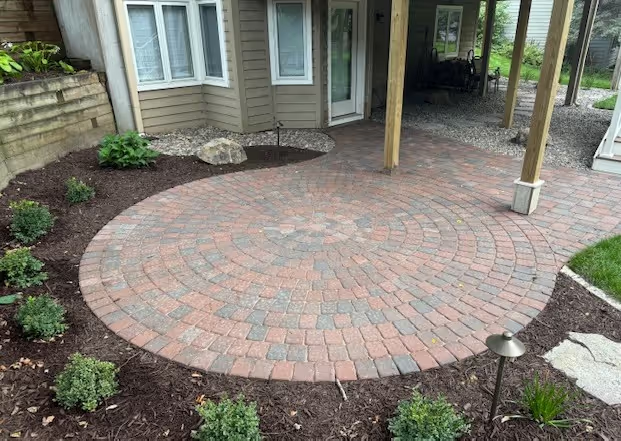
Avoid these common mistakes when building a new patio.
"I wish we'd made it bigger."
"We should have thought about where the sun would be during dinner."
"I didn't realize the pavers would look so different once installed."
After nearly three decades of designing patios and outdoor living spaces across the Twin Cities, Patrick Erkens and Kelly Bremer—Minnesota Landscapes' professional designers—hear these regrets constantly from homeowners who hired contractors without comprehensive design expertise.
These aren't minor quibbles. They're expensive mistakes requiring partial or complete patio reconstruction to fix properly. Mistakes that could have been prevented entirely with proper design planning before installation began.
This comprehensive guide reveals the most costly patio design mistakes Twin Cities homeowners make, explains why they happen, and shows you how Minnesota Landscapes' design-first approach prevents these expensive regrets.
The single most expensive mistake homeowners make is placing their patio based on convenience or assumption rather than careful analysis of how the space will actually function.
The Common Scenario
A typical Edina or Eden Prairie homeowner thinks: "The patio should go right outside the back door." This seems logical—it's the closest spot to the kitchen and provides easy access from inside.
But this reasoning ignores critical factors: afternoon sun exposure that makes the area uncomfortably hot during peak entertaining hours, lack of privacy from neighbors whose windows overlook this location, poor views toward the least attractive parts of the yard, proximity to street noise that reduces the space's enjoyment, and wind patterns that make the area uncomfortable during breezy days.
Six months after installation, these homeowners realize they rarely use their new patio because it's simply not comfortable or pleasant. The investment sits empty while they continue entertaining on their small deck—exactly the problem the patio was supposed to solve.
The Real Cost
Relocating a patio requires complete demolition and reconstruction. For a typical 300-square-foot patio, this means:
Demolition and disposal of existing pavers ($2,000-3,000), excavation and site preparation for new location ($3,000-4,000), new base materials and installation ($4,000-6,000), new pavers and installation ($6,000-9,000), and landscaping repairs and plantings ($2,000-4,000).
Total reconstruction cost: $17,000-26,000—essentially paying for two patios to have one functional space.
The Professional Solution
Patrick Erkens' design process begins with comprehensive site analysis examining sun and shade patterns throughout the day and across seasons, privacy considerations from all angles, views toward attractive features versus problem areas, wind patterns and microclimate factors, access points and circulation flow, proximity to utilities (water, electrical) if adding features, and topography and drainage patterns.
For a recent Woodbury project, this analysis revealed that the homeowner's preferred location—immediately outside their back door—would receive harsh western sun during typical dinner hours and overlook the neighbors' garage. Patrick suggested relocating the patio 20 feet to the east, creating a space with afternoon shade from existing trees, views toward the more attractive landscaped area, natural privacy screening, and surprisingly better access despite being slightly farther from the door.
The homeowners were skeptical initially but trusted the design expertise. One year later, they thanked Patrick profusely—they use their patio constantly and love that it's comfortable even during hot afternoons. The slight extra walk from the kitchen is irrelevant compared to the dramatically improved functionality.
Prevention Strategy
Never decide patio location based on convenience alone. Work with professional designers who analyze your entire property and consider how you'll actually use the space. Invest a few hundred dollars in professional site analysis rather than thousands in reconstruction.
Most homeowners dramatically underestimate how much space they need for comfortable outdoor living. This mistake stems from thinking about dimensions abstractly rather than visualizing actual furniture and people occupying the space.
The Numbers That Don't Work
A typical Twin Cities homeowner thinks: "A 12x12 patio should be plenty for our family of four."
But let's examine what actually fits in 144 square feet:
A standard 48-inch round dining table with four chairs requires approximately 10x10 feet (100 square feet) when you account for space to pull chairs out and walk around the table comfortably. A small gas grill adds another 3x4 feet (12 square feet) plus clearance space. Pathway circulation around furniture requires additional 2-3 feet on all sides.
Suddenly, that 12x12 patio barely accommodates a dining table with minimal circulation and zero additional features. Forget adding a comfortable seating area, a fire pit, or a grilling station. And this assumes just four people—add guests and the space becomes impossibly cramped.
The Real Cost
Expanding an existing patio costs nearly as much as building from scratch because you can't simply add to one edge. The addition must integrate with existing pavers (which may no longer be available in the same color), match existing elevations and slopes, and tie into the existing base properly.
Typical expansion costs:
Matching pavers (if available) or total replacement if unavailable ($3,000-8,000), excavation and base preparation for expanded area ($2,000-4,000), integration work tying new and existing sections ($1,500-3,000), landscaping repairs from construction disturbance ($1,500-3,000), and potential drainage modifications to handle increased patio size ($1,000-2,000).
Total expansion cost: $9,000-20,000—money spent fixing an undersizing mistake that proper planning would have prevented.
The Professional Solution
Patrick Erkens uses a detailed space planning method that considers actual furniture dimensions and human space requirements. During design consultations, he asks:
How many people do you typically entertain? Maximum guest count you might accommodate? Will you have separate dining and lounging areas? Do you cook outdoors? If so, what equipment? Do you want a fire pit or fireplace? Seating walls? Any other features?
Based on these answers, Patrick calculates minimum dimensions ensuring comfortable use. For a family of four who occasionally entertains 8-10 guests, he typically recommends:
Main dining area: 12x14 feet (168 square feet) accommodating a 6-person table with comfortable circulation, lounging area: 10x12 feet (120 square feet) for comfortable seating arrangement, grilling zone: 6x8 feet (48 square feet) for grill plus prep counter, and circulation paths: 3-4 feet wide connecting different zones.
Total recommended size: approximately 350-400 square feet versus the 144 square feet the homeowner initially imagined.
Yes, this larger patio costs more initially—perhaps $15,000 versus $9,000 for the undersized version. But it actually functions for your needs rather than disappointing you every time you try to use it. And it costs far less than spending $9,000 on the too-small patio, living with frustration for two years, then spending another $15,000 to expand it properly.
Prevention Strategy
Use painter's tape or rope to outline proposed patio dimensions on your actual property. Position real furniture (or boxes representing furniture dimensions) within the outline. Try moving around the space as if entertaining guests. This physical mockup reveals size inadequacies before you've committed to permanent construction.
Better yet, work with designers who understand space planning and can show you accurately scaled renderings with furniture positioned correctly.
Minnesota experiences dramatic seasonal variations that affect how and when you'll use outdoor spaces. Designs that ignore these factors create patios that work well for only part of the year—or that never work comfortably.
The Four-Season Reality
Many Minneapolis and St. Paul homeowners plan their patios thinking only about perfect June evenings: comfortable temperatures, pleasant light, and minimal weather concerns. They forget that Minnesota's outdoor season extends from April through October—seven months with wildly varying conditions.
Early spring (April-May) brings cool temperatures where sunny exposure is desirable, unpredictable wind that makes exposed areas uncomfortable, and variable precipitation requiring good drainage. Summer (June-August) delivers intense afternoon sun that makes west-facing spaces unbearable, high humidity that makes still air feel oppressive, and occasional severe storms requiring proper drainage. Early fall (September-October) offers cooler temperatures where sun exposure is again welcome, earlier sunset reducing evening outdoor time, and the first frosts affecting plant selections.
Patios designed without considering these seasonal variations disappoint throughout much of the year.
The Real Cost
Fixing sun and shade mistakes requires either relocating the patio entirely (catastrophically expensive, as discussed) or adding shade structures after the fact. Post-installation shade additions include:
Pergola construction over existing patio ($8,000-15,000), retractable awning systems ($3,000-7,000), umbrellas and shade sails (temporary solutions, $500-2,000), or strategic tree planting (takes years to provide significant shade, $2,000-5,000 plus waiting time).
These additions cost thousands and often look like afterthoughts rather than intentional design elements. They also consume budget that could have addressed the problem proactively during initial design.
The Professional Solution
Patrick and Kelly's design process includes sun study analysis documenting sun and shade patterns at different times of day across the outdoor season, identifying problematic exposure during typical use times, and developing solutions that provide flexibility for varying conditions.
For a recent White Bear Lake project, analysis revealed the homeowner's preferred location received harsh western sun from 5-8pm—exactly when they planned to use the space most. Patrick's solution integrated the patio design with a custom pergola, providing filtered shade during evening hours while maintaining open sky for earlier in the day. Kelly's landscape design included deciduous trees positioned to shade the patio from afternoon sun in summer while allowing warming winter sun to reach the space.
This comprehensive approach addressed sun exposure at the design stage, creating a space comfortable throughout the season rather than requiring expensive fixes after installation.
Prevention Strategy
Document sun and shade patterns on your property before deciding on patio location. Visit the proposed area at different times of day, especially during typical entertainment hours (4-8pm for most families). Take photos showing sun angles and shade patterns.
Consider seasonal variations: deciduous trees provide summer shade but allow winter sun. Evergreens provide year-round shade and wind protection. Structure-based shade (pergolas, arbors) offers consistent coverage regardless of season.
Work with designers who understand Minnesota's seasonal extremes and design for year-round functionality rather than perfect June conditions only.
Pavers look beautiful in showrooms under perfect lighting. They look very different installed outdoors under real-world conditions, and some materials perform poorly in Minnesota's challenging climate.
The Showroom Deception
The homeowner visits a hardscape supplier showroom—a carefully curated display with perfect lighting, pristine pavers, and sales staff emphasizing aesthetics over performance. They fall in love with a color or texture and commit without considering:
How the color looks in natural outdoor light rather than showroom lighting, how paver appearance changes when wet (which happens constantly in Minnesota), how the material performs through freeze-thaw cycles and winter exposure, whether the color complements their home's exterior (dramatically different than showroom walls), or how maintenance requirements fit their lifestyle.
Six months after installation, they discover their "perfect" pavers look much darker when wet (Minnesota = frequent rain), show every speck of dirt and leaf stain, fade noticeably in areas with full sun exposure, or are beginning to crack from freeze-thaw stress because they chose aesthetics over engineering.
The Real Cost
Material regret is catastrophic because fixing it requires complete patio reconstruction. There's no way to change paver color or type without removing and replacing everything. Total reconstruction cost equals original installation cost—essentially doubling your investment to have a patio you actually like.
For a $15,000 patio, material regret means spending another $15,000 for replacement, for a total investment of $30,000 in a patio that should have cost $15,000 with proper material selection initially.
The Professional Solution
Patrick guides material selection by bringing samples to your property, showing how colors look against your home's exterior in natural light, explaining how different materials perform in Minnesota's climate, and considering your lifestyle and maintenance willingness.
He educates homeowners about critical factors often ignored in showroom visits:
Freeze-thaw performance: Not all pavers survive Minnesota winters. Premium products like Belgard and Unilock undergo rigorous testing and provide specifications guaranteeing performance. Budget products may crack or spall within a few years.
Color consistency under various conditions: Dark colors show leaf stains and dirt more visibly. Light colors show less weathering but may darken more when wet. Patrick brings samples that homeowners can wet with a hose, seeing exactly how appearance changes.
Maintenance requirements: Natural stone requires regular sealing. Concrete pavers need joint sand replenishment every few years. Some materials resist staining better than others—critical if you'll have a grilling area.
Architectural compatibility: Your paver selection should complement your home's style and color. Patrick evaluates this in context—at your property, under natural light, considering your actual exterior rather than generic showroom walls.
For a Mendota Heights project, the homeowners initially loved a dark charcoal paver color in the showroom. Patrick brought samples to their property, demonstrating how the dark color contrasted too harshly with their home's warm brick exterior. He suggested a complementary tan-gray that harmonized beautifully with the existing architecture. The homeowners thanked him repeatedly—they would have regretted the dark pavers but hadn't realized the mismatch until seeing it in context.
Prevention Strategy
Never select materials based solely on showroom appearance. Always view samples at your property, under natural light, against your home's exterior. Wet the samples to see appearance when damp (Minnesota's default condition for much of the year).
Work with designers who guide material selection based on performance requirements and architectural context rather than pure aesthetics. Your patio must work functionally before it works aesthetically.
Drainage might seem boring compared to material selection and patio size, but it's the single most critical factor for long-term performance—especially on Minnesota's clay soil.
The Hidden Disaster
Most homeowners think: "The patio slopes slightly away from the house. That should handle drainage, right?"
Wrong. Proper drainage on Minnesota clay soil requires comprehensive systems actively moving water away from the patio and preventing infiltration into the base. Surface slope alone is inadequate.
The typical scenario: A new patio looks perfect for the first season. But the following spring, after winter's freeze-thaw cycles, problems emerge. Water pooling on the surface indicates inadequate slope or base settling, pavers settling unevenly where water infiltrated the base and caused localized freeze-thaw damage, joints separating as pavers shift from ground movement, and cracking or spalling where trapped moisture froze and expanded within pavers.
These problems worsen annually because the root cause—inadequate drainage—continues damaging the installation every freeze-thaw cycle.
The Real Cost
Drainage failures often require complete reconstruction because the base materials are saturated and compromised. You can't simply fix surface pavers—the foundation beneath has been damaged and must be replaced.
Total reconstruction cost for drainage-failed patios:
Demolition and disposal ($2,000-4,000), excavation and removal of saturated base materials ($3,000-5,000), proper drainage system installation ($2,000-5,000), new base materials and compaction ($4,000-7,000), new pavers and installation ($6,000-10,000), and landscaping repairs ($2,000-4,000).
Total cost: $19,000-35,000 for patio reconstruction that proper drainage would have prevented. These numbers are particularly relevant for Eagan and Apple Valley properties where heavy clay soil makes drainage absolutely critical.
The Professional Solution
Rick Morrison, our ICPI-certified Operations Manager, ensures every installation includes comprehensive drainage systems appropriate for site conditions. For Minnesota clay soil, this includes:
Surface grading at minimum 2% slope (2 inches of fall per 10 feet), edge drains collecting water from patio perimeter where accumulation is likely, underground drainage systems moving collected water to appropriate discharge points, integration with roof drainage preventing gutter downspouts from discharging onto or near the patio, and subsurface base preparation with free-draining crushed stone rather than water-retaining materials.
For a recent Cottage Grove project with particularly challenging site drainage, Patrick designed a comprehensive system including edge drains on three sides of the patio, underground piping moving water to a rain garden 40 feet away, integration with gutter downspouts extending them through underground pipes to the same rain garden, and permeable pavers in one section where natural drainage was impossible to achieve otherwise.
This comprehensive drainage design cost an additional $4,500 beyond basic patio installation. Five years later, the patio remains perfectly level with zero drainage issues while their neighbors—who skipped drainage systems to save money—have spent over $20,000 reconstructing failed patios.
Prevention Strategy
Insist on comprehensive drainage planning before installation begins. Your designer should identify where water will go, how it will get there, and what happens during heavy rain events.
Work with ICPI-certified installers who understand that proper drainage isn't optional—it's fundamental to long-term patio performance. The few thousand dollars spent on drainage systems prevents tens of thousands in future reconstruction costs.
Perhaps the most expensive mistake—because it often combines multiple errors discussed above—is hiring contractors without professional design capabilities or attempting DIY installation.
The Allure and Reality of "Saving Money"
Budget contractors advertise tempting prices: "$10 per square foot installed!" For a 300-square-foot patio, that's just $3,000—dramatically less than professional design-build firms charging $40-50 per square foot ($12,000-15,000 for the same patio).
But budget pricing comes with significant compromises: no professional design analysis (you decide patio size, placement, and materials), minimal excavation depth (8 inches rather than proper 12-14 inches for clay soil), inadequate base material and poor compaction standards, no drainage systems beyond basic slope, missing geotextile fabric, inadequate edge restraint, and workers who may lack experience with proper techniques.
The first year, the budget patio looks acceptable. But within 2-5 years, problems emerge that would never occur with professional installation. Settling, drainage issues, paver shifting, joint separation—problems requiring partial or complete reconstruction.
The Real Cost
Budget contractor prices appear attractive initially but become catastrophically expensive when reconstruction becomes necessary:
Initial budget installation: $3,000-5,000, reconstruction within 5 years: $12,000-18,000, and total lifetime cost: $15,000-23,000.
Professional installation costs $12,000-15,000 initially but delivers 30+ years of trouble-free performance. Lifetime cost is actually lower despite higher initial investment.
One Woodbury client shared their experience: They hired a budget contractor for $4,200 to save money versus our $14,500 quote. Four years later, after spending thousands on attempted repairs, they hired us to reconstruct properly. Total cost: $19,700 ($4,200 + $3,500 repairs + $12,000 reconstruction). Had they hired us initially, they'd have saved $5,200 and avoided four years of frustration.
The Professional Solution
Minnesota Landscapes' design-first approach ensures your patio works functionally before installation begins. Our comprehensive services include:
Professional site analysis by Patrick Erkens or Kelly Bremer examining all factors affecting patio success, detailed design development creating optimized solutions, material guidance ensuring selections perform in Minnesota's climate, ICPI-certified installation by Rick Morrison's crews using proven methods, comprehensive drainage systems protecting your investment, and integration with landscaping, lighting, and tree services for complete transformations.
This comprehensive approach costs more initially but delivers results that work perfectly for decades. You pay once, get it right, and enjoy your investment rather than experiencing endless problems requiring expensive fixes.
Prevention Strategy
View patio installation as a 30+ year investment rather than a one-time expense. Divide total cost by expected lifespan to calculate real cost per year:
Budget installation: $19,700 total cost ÷ 10 years before reconstruction = $1,970/year. Professional installation: $14,500 total cost ÷ 35 years lifespan = $414/year.
Professional installation costs less than half as much per year while delivering dramatically better results throughout its lifespan.
Don't make hiring decisions based purely on lowest initial quote. Evaluate contractors' design capabilities, installation credentials (ICPI certification), project portfolio, and client testimonials. The cheapest option is rarely the best value.
Most homeowners think: "I want a patio." What they actually need is a comprehensive outdoor living transformation integrating multiple elements.
The Isolated Feature Problem
A patio arbitrarily placed without considering circulation, views, landscaping, lighting, and other factors creates a disconnected feature rather than an integrated outdoor living space.
Common isolation mistakes include:
Patios inaccessible from main traffic patterns requiring awkward paths or routes, spaces lacking privacy from neighbors, areas with beautiful hardscapes but terrible landscaping making the overall appearance disappointing, patios without lighting severely limiting evening use, and outdoor living areas disconnected from cooking/grilling zones creating frustrating functionality.
These isolated patios might look attractive in isolation but don't function well as actual living spaces.
The Real Cost
Fixing isolation mistakes requires either complete redesign (catastrophically expensive) or numerous additions trying to make the space work:
Adding pathways connecting patio to other areas ($3,000-6,000), privacy screening with plantings or structures ($4,000-8,000), landscape renovations improving overall appearance ($5,000-10,000), lighting additions ($3,000-7,000), and additional hardscape features like outdoor kitchens ($8,000-15,000+).
Total cost of additions: $23,000-46,000—far more than comprehensive planning would have cost initially.
The Professional Solution
Minnesota Landscapes' design-build model addresses your entire outdoor space holistically. Patrick Erkens designs hardscapes considering circulation throughout your property, views from indoor spaces outward, integration with existing features, and opportunities for additional elements enhancing functionality.
Kelly Bremer develops landscape plans complementing hardscape designs, creating cohesive transformations rather than disconnected features. Her expertise ensures plantings frame patios beautifully, provide appropriate privacy screening, deliver year-round interest, and require minimal maintenance.
Our lighting team integrates illumination from the beginning, ensuring you can enjoy your space after dark—critical in Minnesota where summer evenings provide prime outdoor time.
For comprehensive transformations, we coordinate tree removal, hardscape installation, landscape planting, and lighting in logical sequences that minimize property disturbance and deliver cohesive results.
Prevention Strategy
Think holistically about your outdoor space from the beginning. Don't focus exclusively on the patio itself—consider how it integrates with your entire property.
Work with design-build firms offering comprehensive services rather than patio-only contractors. Single-source responsibility ensures everything works together rather than creating a collection of disconnected features.
A Shoreview couple initially contacted multiple contractors, receiving quotes ranging from $7,000 (budget contractor) to $18,000 (Minnesota Landscapes). They leaned toward the budget option despite concerns about experience level.
During our consultation, Patrick walked them through the seven mistakes outlined above, showing how each applies to their specific property. He demonstrated through site analysis that their planned patio location would receive harsh afternoon sun, was undersized for their entertaining needs, and would suffer from drainage problems on their clay soil.
Patrick's alternative design addressed every concern: relocated patio for better sun exposure and views, increased size from 200 to 380 square feet for comfortable entertaining, comprehensive drainage systems appropriate for clay soil, integration with landscape plantings providing privacy and beauty, and lighting design extending usability into evening hours.
Yes, our proposal cost more than the budget contractor. But it solved problems the homeowners hadn't even recognized. They chose to work with us, and two years later they thank Patrick regularly—they use their patio constantly, have had zero maintenance issues, and appreciate that it functions perfectly for their lifestyle.
More tellingly, their neighbors hired the budget contractor. Within three years, that patio showed significant settling and drainage problems. The neighbors have since spent over $15,000 on reconstruction—more than our original quote—while still not achieving the functional excellence our clients enjoy.
Avoid expensive patio design mistakes by starting with professional expertise. Contact Minnesota Landscapes at 651-457-0000 or info@minnesotalandscapes.com to schedule your complimentary design consultation.
Our team serves homeowners throughout the Twin Cities metro including Minneapolis, St. Paul, Edina, Eden Prairie, Woodbury, White Bear Lake, Shoreview, Eagan, Apple Valley, Cottage Grove, Mendota Heights, Dellwood, Afton, Mendota, and Rosemount.
Visit our Projects Gallery to see examples of professionally designed patios that avoid common mistakes, or explore our comprehensive Exterior Design Services to learn more about our design-first approach.
Your patio represents a significant investment that should deliver decades of enjoyment. Don't let preventable mistakes cost you thousands in reconstruction or years of frustration. Get it right the first time with professional design expertise.

